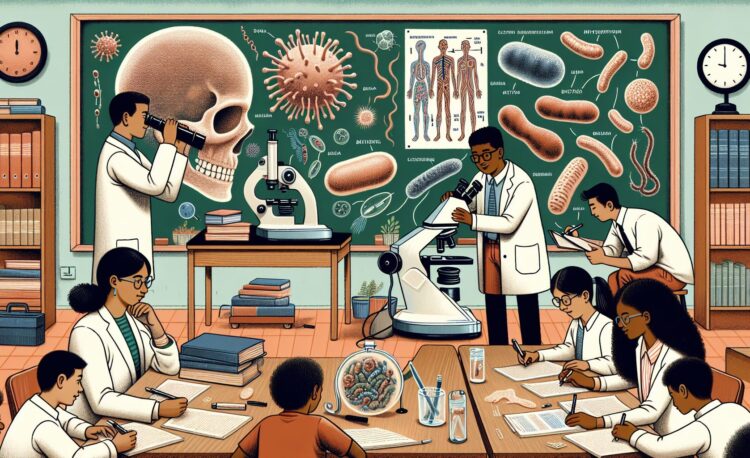
Summer has traditionally been a time for relaxation and sunshine, yet it also presents an extraordinary opportunity to embark on new learning experiences that can ignite the passions of young minds. One such adventure is the exploration of the unseen universe through a summer school course in Microbiology. This fascinating subject provides a window into the microscopic world that exists beyond the reach of the naked eye.
Introduction
When one thinks of summer school, images of catching up on missed coursework or prepping for the next grade often come to mind. However, summer school can also be a platform for diving deep into topics of interest, such as the intriguing field of Microbiology. This course isn’t simply about studying tiny organisms; it’s an immersive journey that offers students the tools to understand the complexities of life at a microbial level.
Body
Microbiology is the scientific study of microorganisms, which are invisible to the naked eye but have a monumental impact on our world. This summer school subject takes a hands-on approach to learning, allowing students to explore the lives of bacteria, viruses, fungi, and protozoa. It’s not only about facts and figures; students will learn how to conduct experiments, use a microscope, and understand how microorganisms affect everything from our health to the environment.
The curriculum is likely to cover a wide range of fascinating topics, including the role of microbes in disease, the significance of the human microbiome, and the application of microbiology in industries like pharmaceuticals and food production. Students can expect to engage in project-based learning, collaborating with peers on experiments that reveal the interaction between microorganisms and their environments.
One of the most enthralling aspects of a summer school microbiology course is the chance for students to conduct their research. Whether it’s examining the microbial life in a local pond or creating their yogurt cultures, young scientists can experience the thrill of discovery firsthand. These practical investigations not only reinforce theoretical knowledge but also help build critical thinking and problem-solving skills.
Summary
A summer school program in Microbiology can transform the way students view the world around them. By lifting the veil on the microscopic spheres of life, young learners are given the tools to ask questions, experiment, and discover. Thus, summer becomes not just a season for rest, but a time for exploration and growth, fostering a lifelong love of learning and a profound appreciation for the smallest wonders of our biosphere.